By John J. Fenton, MBA, CEO of John J Fenton Executive Coaching
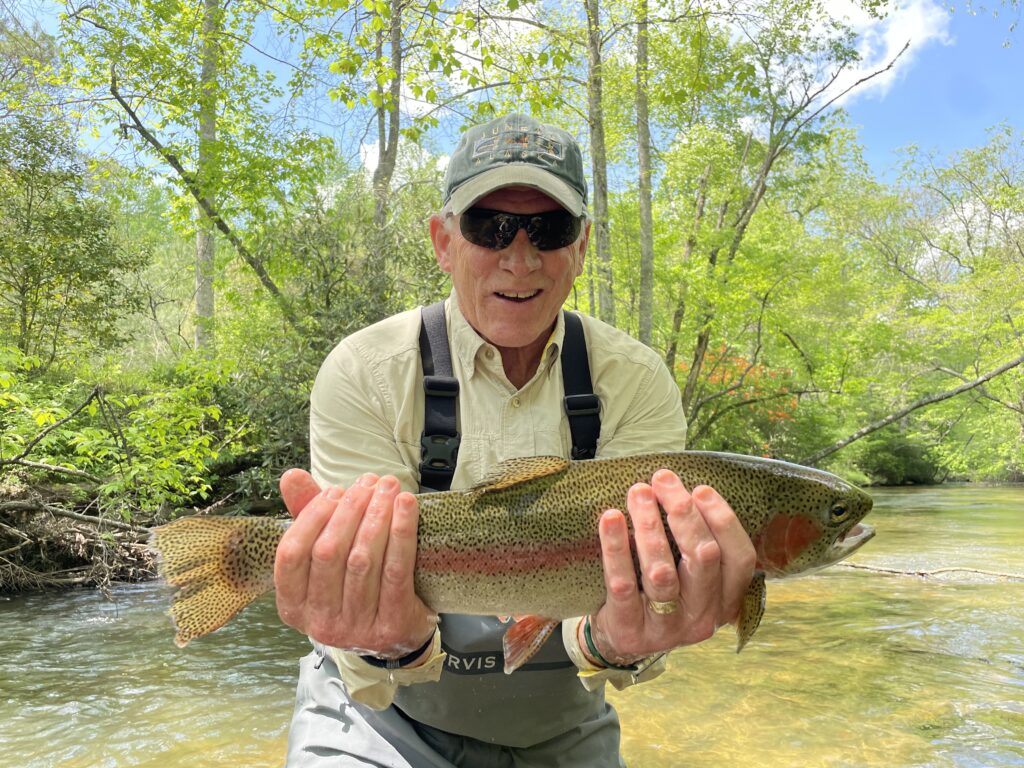
There’s a quiet wisdom in the river.
For those who practice it, fly fishing is more than a sport—it’s a form of meditation, a lesson in patience, presence, and precision. It’s the beauty of nature, the fish, and the effort to land a big one. It’s not about the hoped-for results of catching fish. There’s much more to it than that.
I had a great time last week in Appalachia, near Blue Ridge, Georgia, fishing a creek with a guide. The action was spectacular as I reeled in some of the biggest rainbows I’ve ever caught.
As we were driving home the next day, I got to thinking about the similarities between the art and sport of fly fishing and the lessons we can all learn as leaders.
As a CEO or Managing Partner navigating the pressures of performance, team dynamics, and strategic vision, you might not expect to find leadership lessons on the banks of a trout stream. But if you’ve ever stood knee-deep in a flowing river, casting carefully into uncertain waters, you already understand more about authentic leadership than you think.
1. Presence Over Performance
In fly fishing, you can’t muscle your way to a catch. It requires presence—attunement to the river, the hatch, the conditions, and your surroundings.
The same is true in leadership. Leaders who rely solely on performance metrics or external validation often lose sight of the more nuanced needs of their teams.
Authentic leadership begins by being fully present—not just reacting, but observing, listening, and responding with intention.
2. Mastering the Drift
A perfect cast means nothing without a natural drift. If your fly drags unnaturally, the trout will ignore it.
Likewise, leadership that feels forced or out of sync with team culture loses credibility. Your people can sense authenticity—or the lack thereof. Successful leaders align their vision with the current of their team’s strengths and values, allowing ideas and direction to flow naturally.
3. Reading the Water
Fly anglers learn to read water: the riffles, pools, and undercurrents that signal where fish might be.
Effective leaders must do the same—understanding the emotional currents within their organizations. What’s being said in the meetings? What’s not being said?
Compassionate leaders develop the emotional intelligence to detect subtle shifts in morale, trust, and engagement—and they act on them with care.
4. Patience as a Strategy
Fly fishing demands patience. You may spend hours without a bite, adjusting your technique, changing flies, observing the water.
Leadership is no different. The pressure to deliver results often drives us to over-manage or rush decisions. But meaningful growth—personal and organizational—doesn’t happen on demand.
Leading with purpose requires trust in the process, even when results aren’t immediate.
5. Solitude and Self-Awareness
Time on the river provides space for reflection.
For leaders, carving out solitude is not a luxury—it’s essential. Without reflection, leadership becomes reactive, detached from core values.
My clients—particularly those in high-stakes CPA or financial firms—often tell me they’re seeking clarity and authenticity. And yet, they rarely create space to rediscover themselves. Fly fishing reminds us to slow down, reconnect with purpose, and lead from within.
In the end, both leadership and fly fishing are about the long game—quiet mastery, not instant results. They require you to show up, tune in, and trust that your presence, alignment, and patience will yield the deeper rewards: trust, transformation, and a legacy worth leaving.
Are you ready to stop casting blindly and start leading with intention?